Short answer: 6 things help most with separation anxiety in children — Reunion Certainty, Brave-Practice Ladder, The Pocket Connection Object, The Goodbye Bridge Routine, Name the Worry, and 1 more. Each one is below, in order, with how to do it and why it works.
If this sounds like your house, you are not doing anything wrong — it is one of the most common patterns parents describe. Below are 6 small, practicable things that help, each one drawn from published cognitive behavioural work with children.

| What it is | 6 evidence-based steps you can run at home |
| Time per day | about 5 minutes |
What actually helps
Start by noticing what is happening
Name the Worry. Before you say goodbye, take a moment with your child. Ask them to name the worried feeling they might be experiencing. You can then suggest rating the feeling on a scale, perhaps from 1 to 10, where 1 is a tiny worry and 10 is a very big worry. For example, you might say, “What’s this feeling called? Is it a little worry or a big worry? If 1 is a tiny worry and 10 is the biggest worry, what number is it right now?” This activity helps your child identify and monitor their emotion. It is a first step toward learning to manage the feeling, rather than being overwhelmed by it. Sometimes, a child might struggle to name or rate their worry. If this happens, you can offer a few simple words or numbers as suggestions, such as “a little nervous feeling” or “a 3.” The aim is simply to practice noticing the feeling, not to get it perfectly right. Why it works: affect labeling — helping the child name and rate the worried feeling.
Bring the body down first
The Goodbye Bridge Routine. When it’s time to say goodbye, aim for a short, warm, and predictable routine. Keep your words brief and consistent. You might say something like, “I’m leaving now, and I’ll be back after school. I love you.” Deliver this message calmly and confidently. Your calm and confident approach helps your child learn to cope better with goodbyes. By staying composed, you model effective coping for your child. A brief and predictable goodbye prevents reinforcing your child’s fear, which can happen with prolonged or anxious farewells. Sometimes, parents might feel tempted to extend the goodbye or offer many reassurances if their child seems distressed. Instead, resist the urge to prolong the farewell. Stick to your brief, predictable script and maintain a calm demeanor, even if your child is upset. This helps your child learn to manage their feelings rather than relying on extended reassurance. Why it works: parent modeling calm confident coping with a brief predictable goodbye, reducing accommodation and prolonged reassurance.
Calm-Body Balloon Breaths. Before a difficult goodbye, you can guide your child through calm-body balloon breaths. Ask your child to lie down or sit comfortably and place a hand gently on their tummy. Encourage them to imagine their belly is a balloon. Instruct them to breathe in slowly through their nose, making their tummy big like a balloon, and then breathe out slowly through their mouth, letting the balloon deflate. You can say, “Let’s make our tummy a big balloon when we breathe in, and a flat balloon when we breathe out.” This slow abdominal breathing helps trigger your child’s natural relaxation response. It can lower the physical feelings of anxiety, providing a calming tool for moments when they feel worried. Sometimes children might breathe quickly or use their chest instead of their belly. If this occurs, gently remind them to focus on their tummy moving up and down. You could say, “Remember to make your tummy big, not your chest.” Keep your tone supportive. Why it works: slow abdominal breathing to trigger the relaxation response.
Then do something about it
Brave-Practice Ladder. To help your child with separations, begin by practicing short, planned times apart at home. Start with a very brief separation, perhaps stepping into another room for a minute. When you return, you might say, “You did it! You were brave.” As your child successfully manages these small steps, gradually increase the length of time you are apart. For example, you might go to a different floor or step outside for a few minutes. This practice lets your child experience their anxiety rising and then falling with repeated success. It helps them build tolerance for being apart, so that real drop-offs feel more manageable. A common challenge is when your child becomes very distressed or struggles with a particular step. If this happens, go back to an earlier, easier step where they felt more comfortable. You could say, “That was a tricky one, let’s try the easier step again.” Stay at that easier step until they feel ready to try the next step. Why it works: graded exposure — practicing short separations that gradually increase in length and difficulty.
The rest of the routine
Reunion Certainty. When you need to leave your child, tell them clearly and calmly that you will always come back. Crucially, explain exactly when you will return by linking it to a specific, predictable part of their daily routine. For example, you might say, ‘I always come back after your afternoon snack’ or ‘I will be back right after story time.’ This approach helps your child by making your reunion foreseeable and certain. Providing clear, predictable information about your return can reduce feelings of separation anxiety. A common challenge is to give a return time based on the clock, like ‘I’ll be back at 3 o’clock.’ For children in this age range, reading a clock time may be difficult or meaningless. Instead, focus on those concrete routine moments that your child understands and experiences daily. This makes the information more reliable and easier for them to grasp, reinforcing the certainty of your return. Why it works: predictable reunion / concrete return information tied to a routine moment.
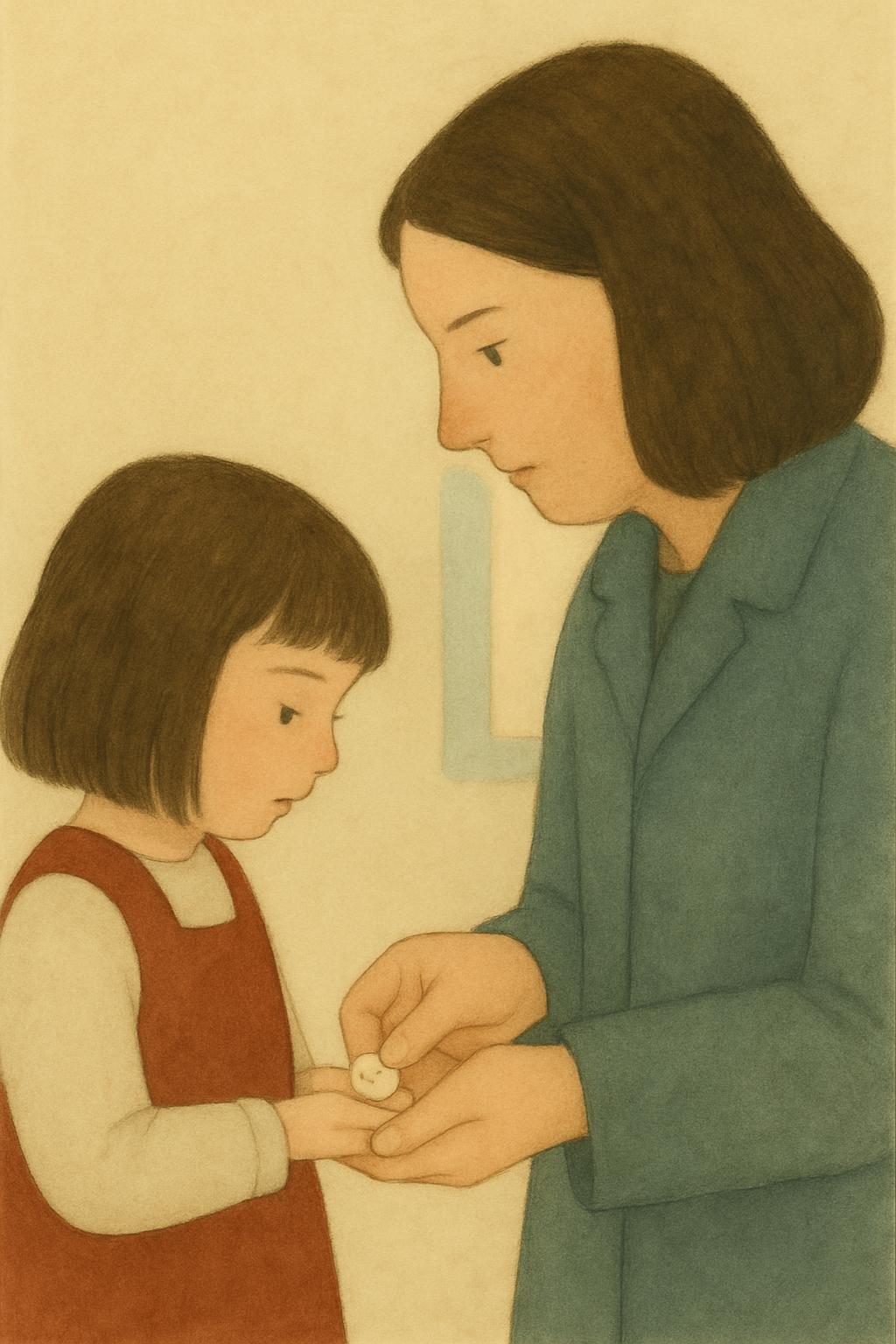
The Pocket Connection Object. To help your child with being separated, you can introduce a pocket connection object. Choose a small item together, like a smooth stone or a special button. Explain to your child that this object stands for your special bond. They can keep it in their pocket or hand when you are apart. You might say, “This object is a reminder of our connection when we’re not together.” Carrying this small object gives your child a concrete coping aid to hold onto while apart. It can support them through the experience of being separated. Sometimes, children might forget to use the object or not want to carry it. If this happens, you can gently remind them what the object is for, or suggest keeping it in a consistent place, like their backpack pocket. If they still prefer not to use it, you can simply offer it again another time without pressure. Why it works: a transitional / connection object carried during separation as a coping aid.

What to expect
Skills practised when a child is calm are the ones available when a child is not — the first few days are practice, not proof. If distress is intense, persistent, or getting worse, speak to your paediatrician or a licensed mental health professional in your area. A printable is a practice tool, not an assessment.
If you would like this as a ready-made routine
We made a printable version of exactly this sequence.
Kite & Koala printables are made by a mental health professional with a PhD. Built on published CBT research. Educational tool — not a substitute for therapy or medical advice.
Common questions
What age is this for?
These steps are written for children. Younger children need an adult to lead each step and to keep it short; older children in the band can often run most of it themselves once the routine is familiar. Adjust the pace rather than skipping steps.
How long before it helps?
Treat the first week as practice, not proof. Skills rehearsed while a child is calm are the ones available when they are not, so the routine is built on ordinary days and drawn on during hard ones. Consistency matters far more than length.
Do I need to buy anything to try this?
No. Every step above can be done with your voice, your hands and a few minutes. A printable simply saves you from remembering the order and gives the child something concrete to hold, which many families find easier at the end of a long day.
When should I talk to a professional?
If distress is intense, lasts for weeks, gets worse, or stops your child doing ordinary things like school, sleep or seeing friends, speak to your paediatrician or a licensed mental health professional in your area. These activities are practice tools, not an assessment.