Short answer: 3 things help most with nightmares in children — Dream Change page, Re-Watch Tracker, Scariness dial. Each one is below, in order, with how to do it and why it works.
If this sounds like your house, you are not doing anything wrong — it is one of the most common patterns parents describe. Below are 3 small, practicable things that help, each one drawn from published cognitive behavioural work with children.
| What it is | 3 evidence-based steps you can run at home |
| Time per day | about 5 minutes |
What actually helps
Bring the body down first
Re-Watch Tracker. At bedtime each night, you will help your child rehearse a new ending to a situation that has been difficult for them. Guide your child to create a vivid picture in their mind of this new ending. You can say something like, ‘Let’s imagine what happened, but this time, let’s see it ending differently.’ Encourage them to describe what they see, hear, and feel in this new, preferred outcome. Repeating this practice nightly helps make the vivid image easily available to your child. This is helpful because when your child feels worried or upset, having a clear, well-practiced image can remain accessible even when their feelings of distress are strong. A common challenge might be if your child struggles to create a vivid image. If this happens, try asking specific questions about details, like ‘What color is that?’ or ‘What sound does that make?’ to help them build a clearer mental picture. Why it works: rehearsing a vivid image so that it stays accessible when arousal or distress is high.
Dream Change page, step 2. When your child is working on their dream change page, guide them to imagine using more than just their eyes. Encourage them to describe what they hear, feel, or even smell within their imagined scene. You might ask, “What sounds can you hear in your new dream?” or “How does it feel to be in this new dream?” or “Are there any smells?” The goal is to engage various senses, not only what your child can see. Involving sounds, feelings, and smells can help make the imagery more vivid and complete for your child. This may allow them to connect more fully with what they are imagining. Sometimes, children might only focus on the visual aspects. If this happens, you can gently prompt them by saying, “That’s a great picture. What sounds might be there, or how does it feel?” This encourages them to explore a broader range of sensory details. Why it works: engaging multiple sensory modalities when building therapeutic imagery.

Then do something about it
For Grown-Ups. When your child attempts an exercise, offer praise. Specifically, acknowledge any effort, no matter how small. You might say, ‘I noticed you tried that for a moment,’ or ‘It was brave of you to even think about it.’ Also, praise them for recognizing their feelings: ‘You did a good job noticing that fear signal.’ And for trying to cope: ‘It’s great that you’re trying to cope.’ This approach helps your child feel supported in their attempts to face challenges. It encourages them to keep trying, knowing that their effort is valued more than a perfect result. It reinforces the idea that noticing feelings and attempting to cope are important steps. Sometimes, parents might naturally want to praise only when an exercise is fully completed or when the child seems to conquer a fear entirely. Instead, focus your praise on the attempt and the process. If your child doesn’t complete an exercise, avoid disappointment. Reframe your feedback to acknowledge any small step. For instance, if they only thought about starting, you can still praise them for ‘thinking about trying’ or ‘noticing the feeling before deciding what to do.’ Why it works: praising a child’s effort and even minimal participation regardless of outcome.
Dream Change p + For Grown-Ups. If, after changing the dream, your child’s rating of how scary it feels is still a 4 or 5, you can try a repair step. Instead of closing the page, encourage your child to make the new ending even bigger. Help them add this enlarged ending to the same picture they have already drawn. Once they’ve done this, ask them to choose and ring the new number that shows how scary the dream feels now. This process helps your child continue to engage with the fearful dream imagery rather than avoiding it. Avoiding fearful things can often make anxiety responses stronger. By facing the imagery in a controlled way, your child learns that they can tolerate it, which can help reduce their fear over time. A common pitfall is to stop too soon if the rating doesn’t immediately drop. Remember to continue with this repair step, up to two times per sitting, but always stop if your child shows signs of distress. Why it works: continuing and enlarging the imagery task rather than ending the sitting on an unreduced rating, because avoidance is what maintains the fear.
When to bring in a grown-up
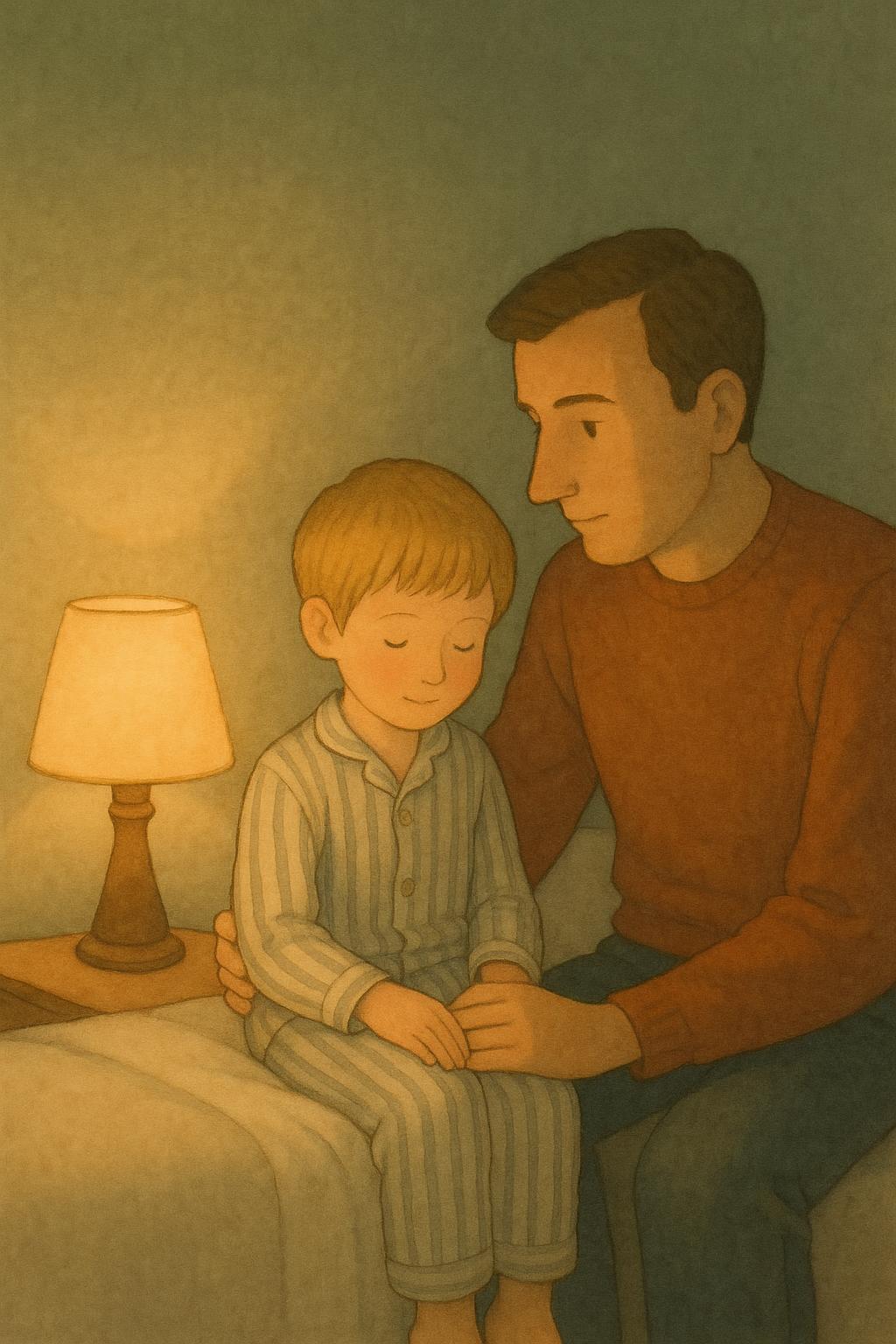
For Grown-Ups. When your child wakes from a bad dream and seeks you out, you can offer a comforting reminder. If your child comes to your bed, gently reassure them with words that affirm their safety and your presence. For instance, you might say, “You had a bad dream, and it felt scary, but you are awake now and perfectly safe in my bed. I am right here.” This approach helps your child cope with the significant fear they might experience during nightmares. It acknowledges their distress while providing a sense of security, especially in moments when they may feel they have almost no control over their fear. A common challenge can be responding with too many questions about the dream or trying to explain it away. Instead, focus on a simple, consistent message of comfort and safety, and keep your voice calm and steady. This direct reassurance is often more effective than lengthy discussions. Why it works: parent response to a child waking from a nightmare — offering a comforting reminder.
The rest of the routine
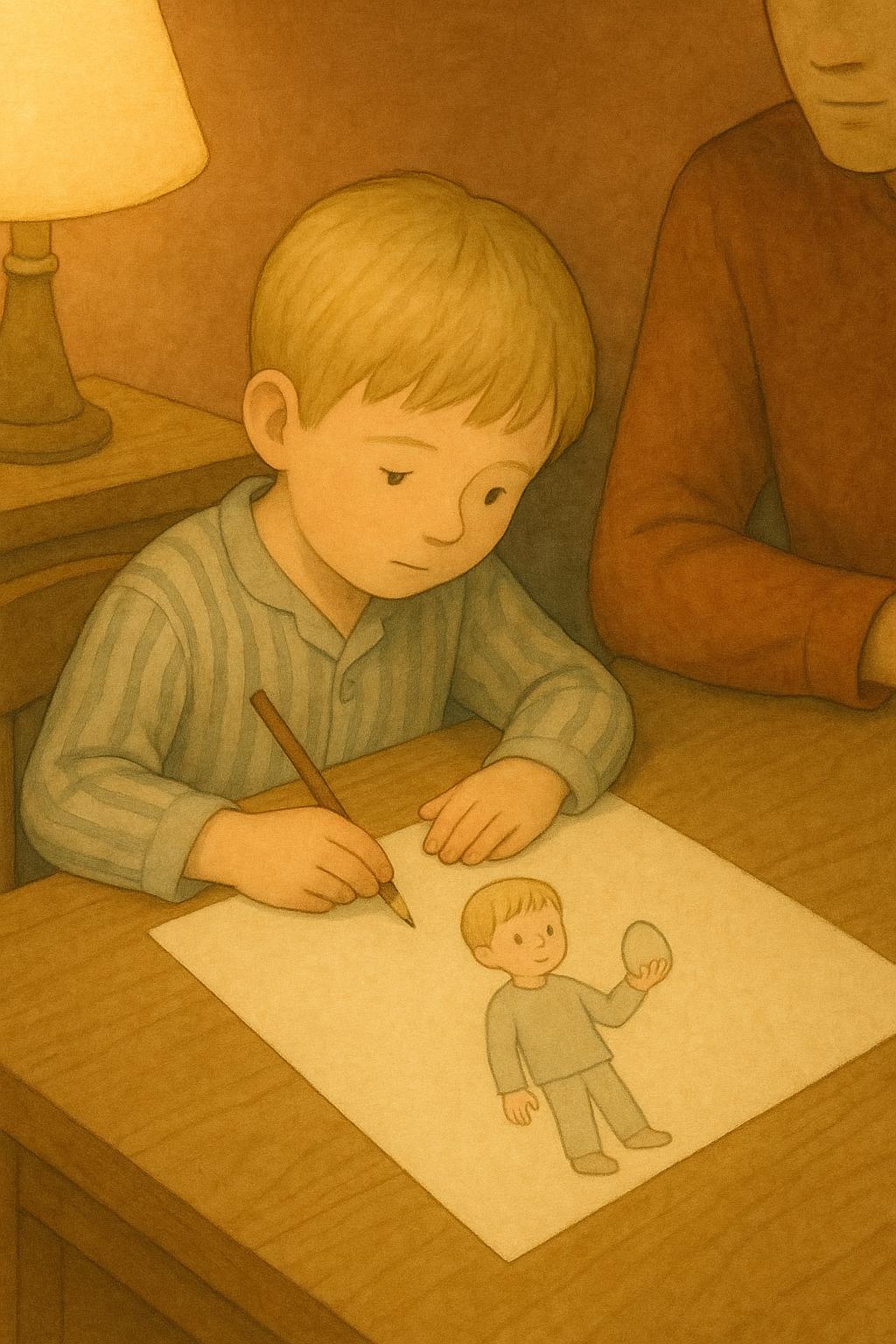
Dream Change page, step 1. For this first step, invite your child to draw what happened in their bad dream. This is best done once, during the daytime, when they are not feeling anxious from the dream itself. You might say, ‘Let’s draw that dream you had. What did it look like?’ This activity offers a concrete way for your child to express and externalise a feared image from their dream. Young children will likely benefit from such concrete activities, as some elements of CBT can be complex for them to grasp at their developmental level. Drawing helps make these ideas more accessible. If your child seems hesitant or struggles to recall details, encourage them to draw any part of the dream they can remember, even if it’s just a small detail or a simplified version. The main purpose is the concrete act of putting something on paper. Avoid pressing for excessive detail if they are resistant; the engagement with the drawing process is key. Why it works: concrete drawing activities for young children to express and externalise a feared image.
Dream Change page, step 2. For this step, guide your child to recall a recent nightmare. Ask them to describe what happened, especially the part that felt scary or upsetting. Then, suggest they imagine what they wish had happened instead. Encourage them to think about how the dream could have ended differently, perhaps in a way that felt safe or happy. Once they have a new ending in mind, have them draw this re-scripted dream. This activity helps your child learn to transform negative night-time imagery. By actively changing and re-scripting the ending, they practice an approach for dealing with and transforming challenging dream content. Sometimes, your child might find it hard to think of a new ending, or they might want to focus on the scary parts. If this happens, gently prompt them with questions like, ‘What’s one small thing you could change?’ or ‘How would you like the story to finish?’ The goal is for them to create their own positive change. Why it works: re-scripting negative night-time imagery such as nightmares.
Dream Change page, step 2. For this part of the activity, you will guide your child to imagine a new ending to their dream. The key is that your child is the one who takes action in this new story. You might ask, “What does your child do in this new ending to make things better?” or “How does your child act in the dream?” This helps your child understand they are more than their fearful feelings and can develop a sense of mastery over them. Imagery often works well for children, especially when words alone do not offer reassurance. By seeing themselves act, your child can externalise fear, viewing it as separate from themselves and something they can influence. Sometimes, children might want an adult or another character to solve the dream problem. Gently redirect by saying, “It is important that you are the one who does something in this story, even if it is a small action.” Why it works: mastery imagery — externalising fear and building the child’s sense of mastery over fearful feelings.
Scariness dial. When using the scariness dial, first ask your child to rate how scary they feel about something before they engage with it. You can say, “On a scale from 0 to 10, where 0 is no scary at all and 10 is the scariest ever, what number is your scary feeling right now?” After they have watched or re-watched the specific item, ask them to rate their scariness again. This helps you accurately assess your child’s current level of anxiety, which is very important in their CBT work. Understanding their number helps you track their feelings. A common challenge is ending a task before your child’s anxiety has adequately reduced. If you notice their number hasn’t gone down much, gently encourage them to continue the task, perhaps by watching it again, until their scary feeling reduces. Stopping an activity prematurely can sometimes strengthen the anxiety response. Why it works: child-rated subjective units of distress (SUDs) to assess the child’s current level of anxiety.
For Grown-Ups. When your child is working on their fear drawings, it is important to observe how they are feeling. If your child seems to be experiencing a lot of fear or distress, it may be a sign that the current drawing or step is too challenging for them right now. In this situation, you can gently suggest stopping the activity for the moment. You might say, “It looks like this might be too scary right now. Let’s try an easier drawing next time.” Stepping back ensures your child is not overwhelmed. This approach allows them to gradually get used to their fears at a pace they can manage, which is important for them to continue engaging with the practice. If a child faces fears that are too big too soon, it can make it harder for them to want to continue. A common issue is accidentally pushing your child too quickly. Instead, always pay close attention to their comfort level and be ready to return to a less scary step if needed. Why it works: stepping back when a child is facing more fear than they are ready for.
What to expect
Skills practised when a child is calm are the ones available when a child is not — the first few days are practice, not proof. If distress is intense, persistent, or getting worse, speak to your paediatrician or a licensed mental health professional in your area. A printable is a practice tool, not an assessment.
If you would like this as a ready-made routine
We made a printable version of exactly this sequence.
Kite & Koala printables are made by a mental health professional with a PhD. Built on published CBT research. Educational tool — not a substitute for therapy or medical advice.
Common questions
What age is this for?
These steps are written for children. Younger children need an adult to lead each step and to keep it short; older children in the band can often run most of it themselves once the routine is familiar. Adjust the pace rather than skipping steps.
How long before it helps?
Treat the first week as practice, not proof. Skills rehearsed while a child is calm are the ones available when they are not, so the routine is built on ordinary days and drawn on during hard ones. Consistency matters far more than length.
Do I need to buy anything to try this?
No. Every step above can be done with your voice, your hands and a few minutes. A printable simply saves you from remembering the order and gives the child something concrete to hold, which many families find easier at the end of a long day.
When should I talk to a professional?
If distress is intense, lasts for weeks, gets worse, or stops your child doing ordinary things like school, sleep or seeing friends, speak to your paediatrician or a licensed mental health professional in your area. These activities are practice tools, not an assessment.
Leave a Reply