Short answer: 6 things help most with the 5-4-3-2-1 grounding technique in children — NOTICE THE WOBBLE, THE 5-4-3-2-1 SENSORY ANCHOR, BACK TO NOW, ONE SLOW BREATH, COACH, and 1 more. Each one is below, in order, with how to do it and why it works.
If this sounds like your house, you are not doing anything wrong — it is one of the most common patterns parents describe. Below are 6 small, practicable things that help, each one drawn from published cognitive behavioural work with children.
| What it is | 6 evidence-based steps you can run at home |
| Time per day | about 5 minutes |
What actually helps
Start by noticing what is happening
NOTICE THE WOBBLE. When your child shows physical signs of anxiety, such as a fast heartbeat, shaky hands, or a squeezing stomach, gently bring it to their attention. You might say, “I notice your hands are a little shaky,” or “Does your tummy feel a bit tight right now?” The goal is to help them connect these physical feelings to what we call “the wobble” – their body’s signal that they might be starting to feel anxious. This practice helps your child learn to recognize rising anxiety early. By noticing these signals, your child can then understand that it’s a cue to begin using a calming coping skill. If your child doesn’t seem to notice or denies the feeling, don’t insist. Instead, you can calmly suggest, “Sometimes when we feel a bit worried, our body gives us a signal, like a wobbly tummy. Just noticing it is a helpful first step.” The aim is gentle awareness, not confrontation, so they learn to trust their body’s information. Why it works: recognizing the body’s fear/anxiety signal (racing heart, shaky, tight tummy) as the cue to begin a coping skill.
Bring the body down first
THE 5-4-3-2-1 SENSORY ANCHOR. To help your child with this technique, guide them to identify things using their senses. Start by asking them to name five things they can see around them. Then, ask them to identify four things they can feel, such as their clothes or the chair they are sitting on. Next, prompt them to name three things they can hear. After that, ask for two things they can smell. Finally, ask them to name one thing they can taste, even if it’s just the taste in their mouth. This activity helps your child by deliberately shifting their attention. When they focus on present-moment sensory experiences instead of anxious thoughts, it can calm their fear response and strengthen their sense of calm. Sometimes, a child might find it hard to name items, especially when feeling anxious. If this happens, gently offer a few examples or suggest simplifying the number of items for each sense. The goal is to gently guide their focus, not to make it a test. Why it works: present-moment attention through the senses to interrupt anxious thought and strengthen calm.
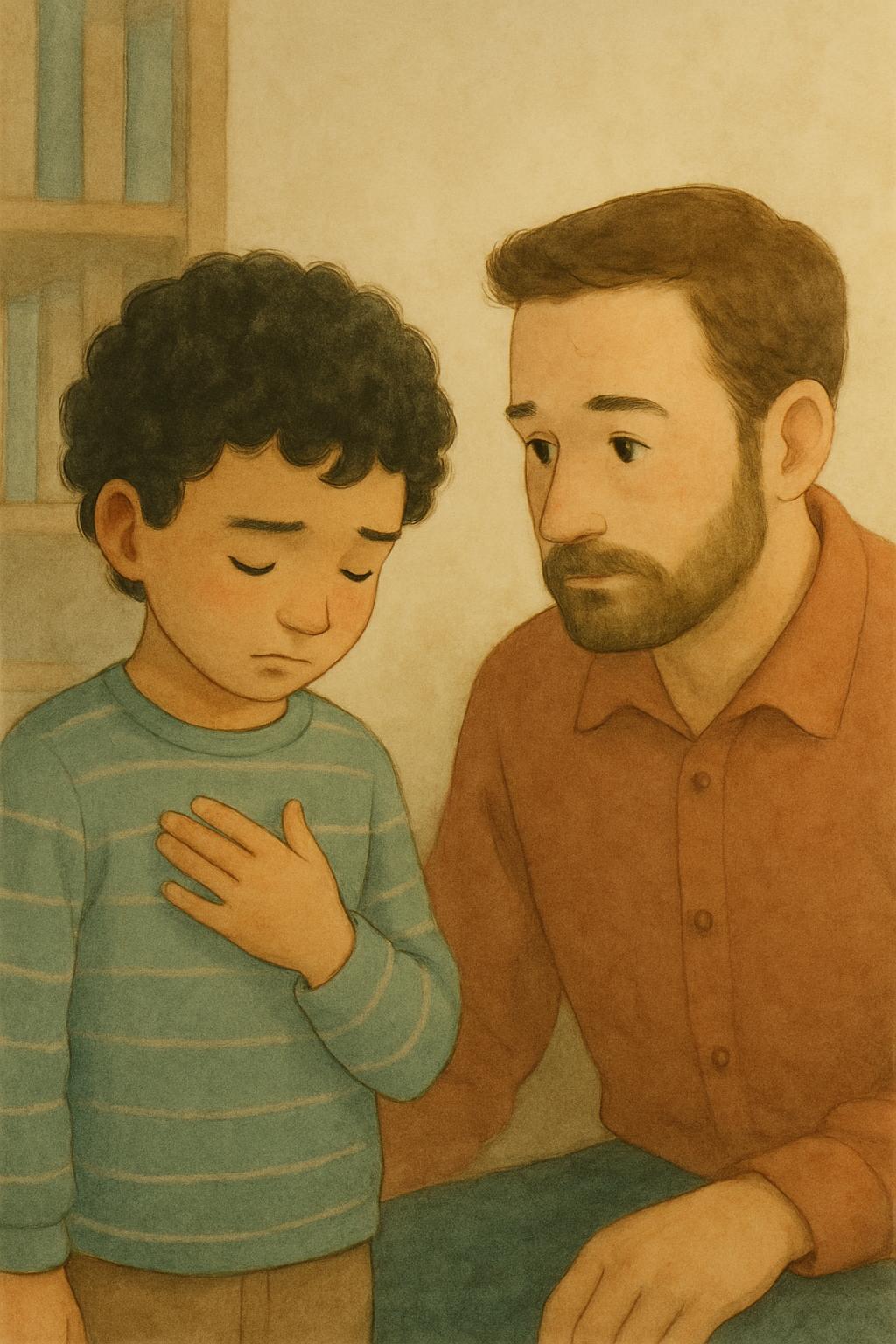
ONE SLOW BREATH. When your child is feeling anxious or overwhelmed, guide them to take one slow breath. You can say, “Let’s take a slow breath together, in through your nose and out through your mouth.” Encourage them to make the breath long and gentle. Taking a few slow breaths like this helps to calm your child’s body by reducing the fight-or-flight arousal. This process can lower the physical tension that often comes with acute anxiety and feeling overwhelmed. If your child struggles to take a slow breath, or breathes too quickly, try modeling it yourself. Place a hand on your stomach and theirs, and exaggerate your own slow breathing so they can see and feel it. Do not force them, but gently invite them to join you. This simple action can help them feel more settled. Why it works: slow breathing / relaxation to calm the fight-or-flight arousal of acute anxiety.
Work with the worried thinking
BACK TO NOW. When your child is caught in a worry-spin, you can help them by gently bringing their attention to the present moment. Ask them to notice what they see, hear, or feel right now. You might say, “What sounds can you hear around us?” or “Look at the color of this toy.” This practice helps your child refocus their attention away from anxious, future-oriented thoughts. Redirecting attention toward a concrete present-moment focus helps interrupt the anxiety cycle instead of feeding it. This gentle shift can help your child step out of the worry pattern. Sometimes, children might resist or keep talking about their worries. If this happens, avoid engaging with the worry itself. Instead, calmly and repeatedly invite them back to a present-moment observation, even if it is a simple one like “Can you feel your feet on the floor?” This helps reinforce the skill of focusing on what is happening now. Why it works: refocusing attention away from anxious, future-oriented thoughts to what is happening right now.
When to bring in a grown-up
COACH, DON’T JUST REASSURE. When your child is feeling anxious, your role is most helpful when you guide them to use a coping skill they have learned. Instead of simply repeating “It’s okay,” you can actively coach them. For example, you might say, “Let’s try our deep breaths together,” or “Can you remember that calm-down exercise we practiced?” This approach helps your child engage directly with a skill. Repeating reassurance, while it might offer a brief moment of calm, often does not help long-term and can even contribute to maintaining the anxiety. By coaching, you are empowering your child to practice and rely on their own tools during an anxious moment. A common challenge is when your child might seem to settle briefly after reassurance, making it feel effective. However, this short-term calm can lead to a cycle where the anxiety persists. Instead, gently redirect their attention to their coping skill, even if it feels repetitive, to help them build their independence in managing their feelings. Why it works: parent coaching of the coping skill rather than repeated reassurance for an anxious child.
WHEN A FEELING IS TOO BIG. When your child experiences a feeling or problem that feels too big for them to manage alone, encourage them to talk with you or another trusted adult. You can say, “It sounds like that feeling is really big right now. When feelings get too big, it can help to tell a grown-up you trust, and we can figure out what to do together.” This approach helps your child develop an adaptive way to cope with overwhelming emotions or situations. By seeking help from a trusted adult and deciding together what might help, your child learns a valuable strategy for managing difficulties. A common challenge might be if your child struggles to express what is wrong or doesn’t want to talk. Instead of pushing them, you can gently offer a few feeling words, like “Are you feeling sad, angry, or worried?” If they are still hesitant, reassure them that you are there to listen when they are ready. Remember to focus on deciding together, rather than immediately offering your own solution. You could ask, “What do you think might help?” or “What are some ideas we could try?” Why it works: help-seeking from a trusted adult as adaptive coping for an overwhelming feeling or problem.

What to expect
Skills practised when a child is calm are the ones available when a child is not — the first few days are practice, not proof. If distress is intense, persistent, or getting worse, speak to your paediatrician or a licensed mental health professional in your area. A printable is a practice tool, not an assessment.
If you would like this as a ready-made routine
We made a printable version of exactly this sequence.
Kite & Koala printables are made by a mental health professional with a PhD. Built on published CBT research. Educational tool — not a substitute for therapy or medical advice.
Common questions
What age is this for?
These steps are written for children. Younger children need an adult to lead each step and to keep it short; older children in the band can often run most of it themselves once the routine is familiar. Adjust the pace rather than skipping steps.
How long before it helps?
Treat the first week as practice, not proof. Skills rehearsed while a child is calm are the ones available when they are not, so the routine is built on ordinary days and drawn on during hard ones. Consistency matters far more than length.
Do I need to buy anything to try this?
No. Every step above can be done with your voice, your hands and a few minutes. A printable simply saves you from remembering the order and gives the child something concrete to hold, which many families find easier at the end of a long day.
When should I talk to a professional?
If distress is intense, lasts for weeks, gets worse, or stops your child doing ordinary things like school, sleep or seeing friends, speak to your paediatrician or a licensed mental health professional in your area. These activities are practice tools, not an assessment.
Leave a Reply